




- US - English
- China - 简体中文
- India - English
- Japan - 日本語
- Malaysia - English
- Singapore - English
- Taiwan – 繁體中文

Quick Links
With an extremely wide range of data constantly generated, organizations can unlock significant value when that data is collected, analyzed and used effectively. Data modeling helps make that possible by representing available data clearly and consistently — so teams can design the right processes, systems and analytics.
Learn how different organizations use data modeling to generate insights and drive additional value.
For more information on Micron and the work carried out within the company, contact the Sales Support Team.
What is data modeling?
Data modeling definition: Data modeling is the process of defining and describing how data within an organization is structured, related and used. A data model provides a shared blueprint that helps teams capture, store, integrate and analyze data efficiently.
The main purpose of data modeling is to clarify what data should be collected and how it should be organized. That foundation supports downstream activities such as data analysis, data quality (including cleaning) and the long-term use of insights.
Data modeling is customizable because it reflects an organization’s specific needs. To use data modeling effectively, organizations should align on what they want to learn from their data — and where they expect to create the most value.
How does data modeling work?
Data modeling is a structured process for mapping how data is collected, connected and used across systems. The exact details vary by organization based on volume, complexity and the types of data involved.
A typical approach includes:
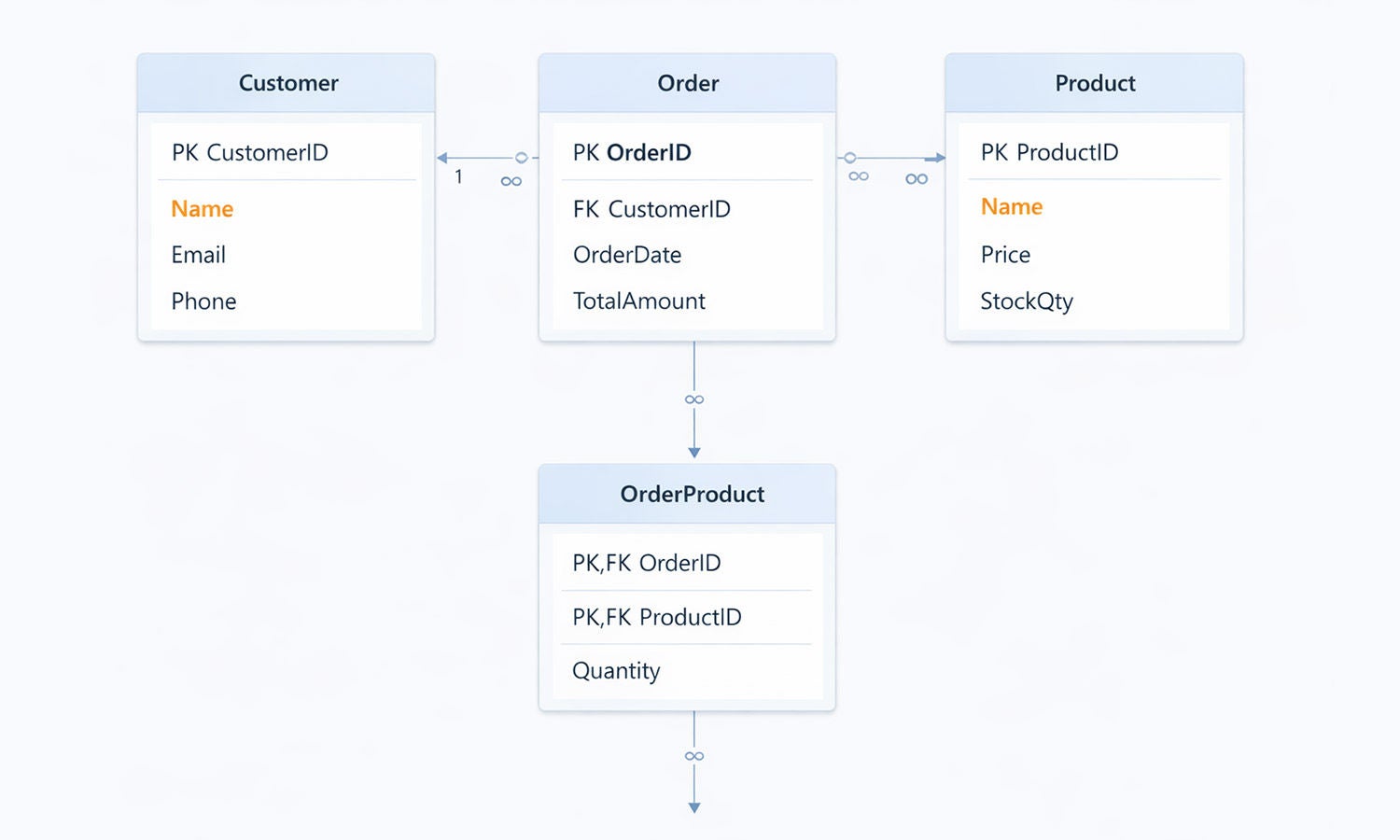
- Identify entities (major things the business cares about). For example, in e-commerce, entities might include customers, orders, products and shipments.
- Define attributes and requirements for each entity. For a customer entity, attributes might include name, email and delivery address.
- Model relationships between entities. For example, a customer places an order; an order contains products. Modeling these relationships helps teams understand how datasets connect and how information flows through the business.
- Represent the model visually and/or logically. Teams often create diagrams to show entities and their relationships, providing a clear view of how data should be collected, stored and used.
Identifying relationships between entities is central to data modeling because it creates a more accurate and usable picture of organizational data — and supports better decision-making, reporting and system design.
What is the history of data modeling?
The concept of using data visualizations to understand data predates modern computing. Charts and diagrams have long been used to help people interpret patterns and relationships within large datasets. As data became more valuable — and significantly more complex — formal data modeling and visualization methods grew in importance, providing structured ways to describe how data is organized and used.
- 1970s, the relational model: In the early 1970s, Edgar F. Codd of IBM introduced the relational model, a foundational approach to data modeling that proposed representing data in tables composed of rows and columns. This model established clear rules for organizing data and defining relationships, enabling consistency, integrity and scalability. Relational databases quickly became the dominant way organizations stored and managed structured data.
- 1980s, entity relationship (ER) modeling: As databases grew in size and complexity, entity relationship (ER) modeling emerged as a standard method for visualizing database structure. ER diagrams represent data as entities and explicitly show how those entities relate to one another. By making relationships visible and intuitive, ER modeling became a widely adopted tool for database design and communication between technical and non‑technical stakeholders.
- 1990s, NoSQL and alternative data models: During the 1990s, new data modeling approaches began to gain attention as alternatives to strictly relational designs. These approaches — later grouped under the term NoSQL — supported different data structures, such as key‑value pairs and document-based models. Rather than replacing relational models entirely, NoSQL databases expanded the data modeling toolkit to better support specific use cases and emerging workloads.
- 21st century, growth of non-relational and hybrid models: As “big data” use cases expanded, non-relational databases became more common due to their flexibility and ability to store and process large volumes of diverse data. Modern data architectures increasingly combine relational and non‑relational models, reflecting the reality that different types of data — and different workloads — benefit from different modeling approaches.
What are the key types of data modeling?
There are three common types of data modeling, each serving a different purpose:
Conceptual data modeling provides a high-level view of the data and how it fits together. It focuses on business concepts and is often used to align stakeholders on the overall structure.
Logical data modeling adds more detail about relationships and rules, without tying the model to a specific database technology. Logical models are often used to design larger databases or data warehouses.
Physical data modeling. A physical data model translates a logical model into a detailed database blueprint, including implementation details. This is the most specific and technical type of data modeling.
How is data modeling used?
Data modeling use cases vary, but the overall goal is to improve how an organization stores and uses data to support better operations and decision-making.
- Retail and e-commerce: Data modeling in retail and e-commerce helps define what information a database needs (e.g., customers, orders, products) and how those elements relate — supporting functions like purchase history and fulfillment workflows.
- Application development: Data modeling in application development enables developers to understand what an application must store and process, guiding choices about storage, performance and how different features share data.
Entity relationship (ER) models and relational databases serve different purposes in data modeling. ER models are conceptual and logical design tools used to visualize data entities and their relationships. Relational databases are an implementation of those designs, storing data in tables with rows and columns. In practice, ER modeling often comes first to define structure and relationships, while relational databases apply that structure in a working system.
Relational data models organize data into structured tables with predefined schemas and relationships, making them well-suited for consistent, transactional data. NoSQL data models support alternative, non-tabular structures — such as documents or key‑value pairs — offering greater flexibility for unstructured or rapidly changing data. Modern data architectures often use a combination of relational and NoSQL models, depending on the type of data and workload requirements.